Lisa Gumieniuk
Search recovery, measurement and product experiments
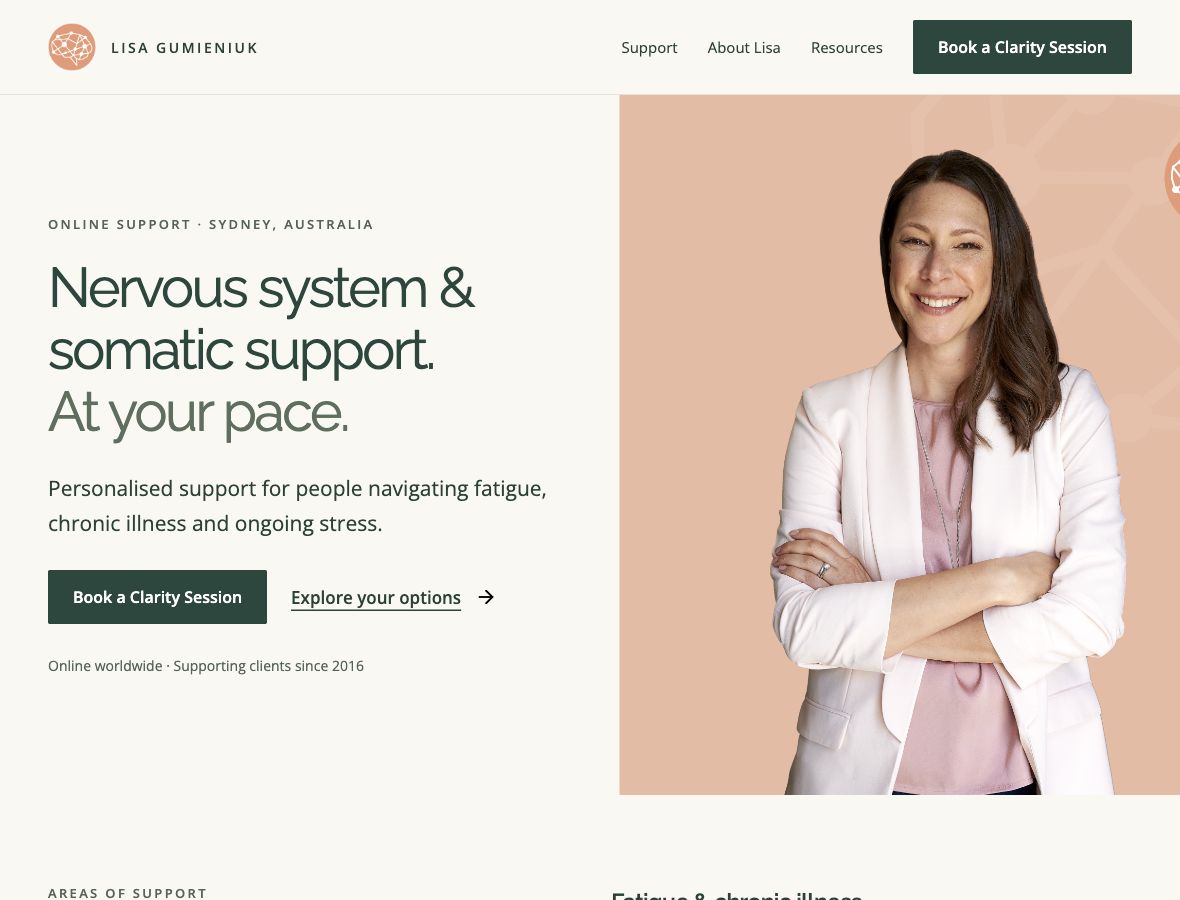
The work grew from search recovery into enquiry measurement, a controlled homepage experiment and a guided AI-session prototype. Each had a different release gate and a different standard of evidence.
The problem and my responsibility
A practitioner website needed to support discovery, explain its services accurately and turn interest into an enquiry. Search settings, content structure and measurement were not reliable enough to make those decisions from the data.
The homepage was marked noindex and its canonical pointed to a client portal. Booking-click measurement could double-count. Redesigning the page before repairing those foundations would make the next result harder to interpret.
What I owned
- Prioritization across live repairs, measurement and private product experiments
- Technical search repairs, content infrastructure and enquiry instrumentation
- Homepage experiment design, implementation, controls and quality checks
- Guided AI-session prototype, reference boundaries, state logic and handover evidence
Users, constraints and success criteria
People evaluating the practitioner's services, readers arriving through search, and the practice owner managing enquiries and content.
A visitor can understand the service and reach the right next step, with reliable measurement of exposure, intent and completed actions.
Existing production site
The WordPress and Elementor site had to keep working while repairs were made. The existing homepage remained the control for the private experiment.
Health-related content
Practitioner credentials, clinical language and protocol content needed separate review. Reza owned medical and editorial review; I owned the technical implementation and product behavior.
Attribution
A scheduler click was not a booking. Completed-booking attribution and experiment release approval remained explicit dependencies.
The decisions that shaped the product
Fix measurement before claiming improvement
Exposure, CTA clicks and completed bookings were treated as separate events. Dedupe and recovery behavior were part of the experiment design, not cleanup work after launch.
Preserve a control and a release gate
The new homepage stayed private while the original remained live. Allocation, consent, administrator controls and monitor history were checked before considering a public experiment.
Bound the AI interaction
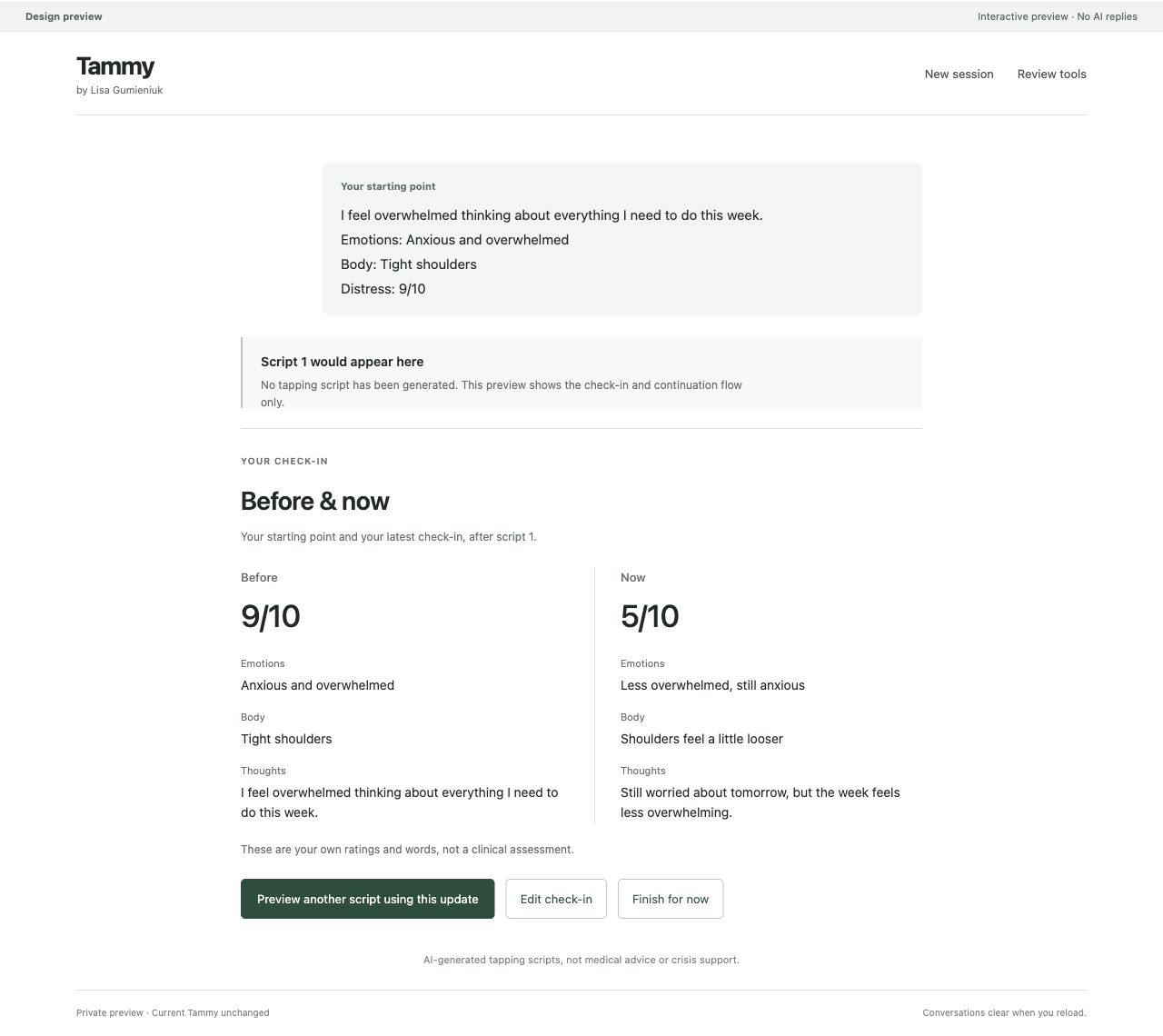
The guided-session prototype mapped existing reference material to a defined session flow. Optional check-ins and continuation states were explicit, with spending controls around the GPT adapter. It was not presented as validated clinical guidance.
From decisions to delivery
Restore discoverability
Corrected homepage indexing and canonical settings, restored category archives, and repaired pagination and internal links.
Make the enquiry signal trustworthy
Repaired scheduler tracking and duplicate counting. A controlled test verified one click producing one booking-link event; an owner-confirmed test enquiry checked the alternative contact path.
Build private experiments
Built a homepage challenger with allocation, consent handling and monitoring, alongside a guided-session prototype with explicit state transitions and a bounded AI adapter.
System and integration detail
Search and content
WordPress archives, canonical and indexing rules, valid pagination, image references and internal links.
Experiment system
Control and challenger, consent-aware allocation, separate funnel events, deduplication, recovery and an administrator monitor.
Guided-session prototype
Session state, optional emotion and body check-ins, reference mapping and a GPT adapter with spending controls.
Evidence from the work
Indexing recovery verified
A later Google inspection confirmed that the homepage was indexed with the correct canonical after the repair.
One click, one event
A controlled scheduler-click test produced one GA4 booking-link event. This verifies that interaction, not a completed booking or an increase in clients.
Experiment and session checks
The private homepage work included 22 viewport checks, 52 isolated WordPress assertions and 14 monitor scenarios. The session prototype had 14 state checks and 36 passing Python tests using synthetic inputs.
Outcome and lessons
Live search and enquiry-measurement defects were repaired. The next product decisions had working private prototypes and documented checks, rather than a redesign presented as a proven improvement.
The homepage experiment and guided-session prototype remained private in the October 26 record. No winning variant, conversion lift or validated clinical AI output is claimed. Screenshots show those private versions.
- Repairing the measurement can change what is worth building next.
- A working prototype answers implementation questions; it does not prove a customer or clinical outcome.